India's Leading HRMS & Attendance Solution Provider |
Attendance & Biometrics

Attendance Management Articles & Guides

Expert guides on biometric attendance systems, face recognition technology, mobile attendance, and workforce time management — helping Indian businesses eliminate manual errors and achieve 100% accuracy.

  • 27 articles
  • 458 min of expert guidance
  • By the MegaMind HR team

Attendance Systems Explained: Biometric, Face, GPS and Cloud

Accurate attendance is the base of payroll, shift planning and compliance. Modern systems range from fingerprint and face recognition terminals to mobile apps with GPS geo-fencing, and most businesses end up using a mix depending on whether staff work on one site, across shifts or in the field.

This section covers the whole decision path. If you are new, begin with the attendance management guide and the online attendance system guide. If you are buying hardware, the machine buying guide, price guide and comparison articles help you avoid common mistakes such as choosing a device that cannot sync with payroll. For field teams, the GPS and mobile app articles explain geo-fencing and proof-of-presence options.

We also publish local buying guides for Delhi, Noida and NCR, student attendance guidance for schools and colleges, and visitor management for secure premises. Each article is practical and vendor-neutral where we compare technologies.

What you will learn

  • Fingerprint vs face recognition vs mobile GPS attendance
  • How to choose a device and what it should cost
  • How attendance data flows into payroll without manual work
  • Attendance for schools, factories, offices and field teams

All Attendance & Biometrics Articles (27)

Online Attendance Management System: Complete GuideAttendance & Biometrics

Online Attendance Management System: Complete Guide

The complete guide to online attendance management systems - how they work, GPS and geofencing, payroll sync and how to pick the right one for your business in 2026. Aug 2026 12 min readRead article
Best Attendance Software in India: Top Solutions ComparedAttendance & Biometrics

Best Attendance Software in India: Top Solutions Compared

Compare the best attendance software in India - biometric, mobile, and cloud options with shift management, payroll integration, and statutory compliance. Aug 2026 20 min readRead article
Attendance Software for Small BusinessesAttendance & Biometrics

Attendance Software for Small Businesses

Attendance software for small businesses explained - simple, affordable options with mobile punch-in, payroll sync and room to grow without heavy training. Aug 2026 12 min readRead article
Best Attendance Software for EmployeesAttendance & Biometrics

Best Attendance Software for Employees

The best attendance software for employees - simple clock-in apps, self-service access, accurate timesheets for shifts, overtime and leave, plus privacy safeguards. Aug 2026 12 min readRead article
Workforce Management Software: The Complete GuideAttendance & Biometrics

Workforce Management Software: The Complete Guide

Workforce management software explained for India: forecasting, scheduling, time & attendance, leave, overtime rules and productivity analytics. Aug 2026 22 min readRead article
Real-Time Biometric Attendance System GuideAttendance & Biometrics

Real-Time Biometric Attendance System Guide

What a real-time biometric attendance system is - how live punches sync to software and payroll, hardware and software requirements, and the 2026 benefits. Aug 2026 12 min readRead article
Fingerprint Attendance Machine: Complete Buying GuideAttendance & Biometrics

Fingerprint Attendance Machine: Complete Buying Guide

How to choose a fingerprint attendance machine: sensor plate type, capacity, recognition speed, rechargeable battery and connectivity. Aug 2026 21 min readRead article
Best Attendance Machine in India: Devices ComparedAttendance & Biometrics

Best Attendance Machine in India: Devices Compared

Compare the best attendance machines in India: fingerprint vs face vs card vs RFID, plus key specs like capacity, memory and connectivity. Aug 2026 22 min readRead article
Attendance Machine Buying Guide: 12 FactorsAttendance & Biometrics

Attendance Machine Buying Guide: 12 Factors

A complete attendance machine buying guide covering types, workforce size, memory, connectivity, software integration, maintenance and cost. Aug 2026 20 min readRead article
Attendance Machine Price in India: 2026 CostsAttendance & Biometrics

Attendance Machine Price in India: 2026 Costs

How much does an attendance machine cost in India? Realistic price ranges for fingerprint, face and RFID devices, plus hidden costs and TCO. Aug 2026 20 min readRead article
Attendance Machine vs Mobile Attendance: Which Better?Attendance & Biometrics

Attendance Machine vs Mobile Attendance: Which Better?

Compare attendance machine vs mobile attendance on cost, hardware, hygiene, coverage, field teams and integrations. Learn which is better and when to go hybrid. Aug 2026 21 min readRead article
Cloud Attendance Software vs Biometric MachinesAttendance & Biometrics

Cloud Attendance Software vs Biometric Machines

Cloud attendance software vs biometric attendance machines compared for Indian businesses - cost, coverage, hybrid teams, mobile geofencing and payroll integration. Aug 2026 12 min readRead article
Mobile App vs Biometric AttendanceAttendance & Biometrics

Mobile App vs Biometric Attendance

Compare mobile app attendance vs biometric. Learn pros and cons of GPS, face recognition, and fingerprint systems. Jul 2026 18 min readRead article
Mobile Attendance App: Mark Attendance From AnywhereAttendance & Biometrics

Mobile Attendance App: Mark Attendance From Anywhere

Discover how a mobile attendance app with GPS punch, face verification and geo-fencing lets employees mark attendance from anywhere. Aug 2026 20 min readRead article
GPS Attendance System: Track Field & Remote TeamsAttendance & Biometrics

GPS Attendance System: Track Field & Remote Teams

Learn how a GPS attendance system uses geo-fencing, check-in radius, selfie verification and reporting to track field and remote teams. Aug 2026 19 min readRead article
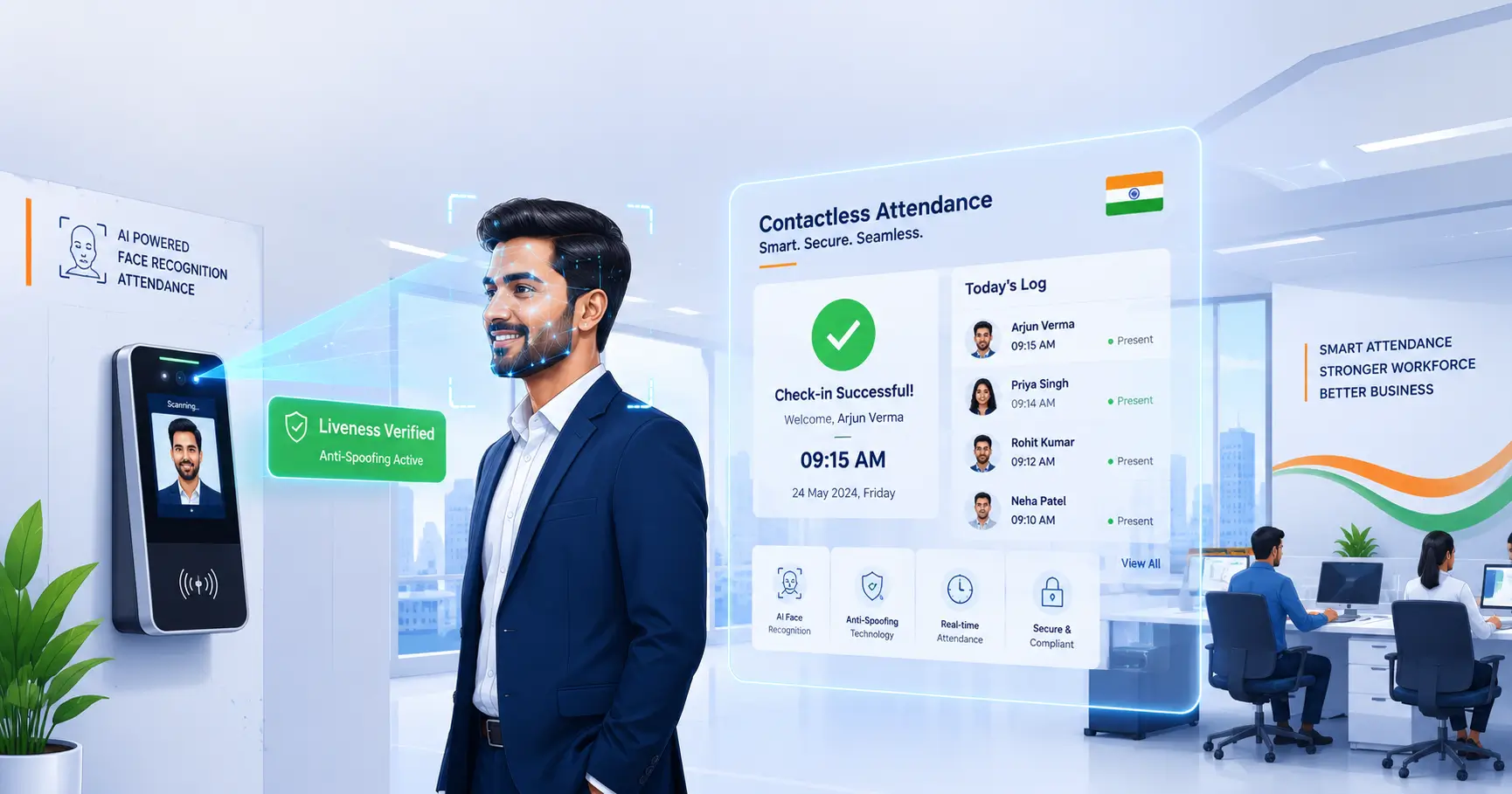
AI Face Recognition AttendanceAttendance & Biometrics

AI Face Recognition Attendance

Learn how AI face recognition attendance works with contactless technology and anti-spoofing for Indian businesses. Jul 2026 22 min readRead article
Face Recognition Attendance System: 2026 GuideAttendance & Biometrics

Face Recognition Attendance System: 2026 Guide

How face recognition attendance systems work, anti-spoofing and liveness, accuracy with masks, NFC, and where it beats fingerprint. Aug 2026 24 min readRead article
AI Attendance System: Smart Contactless TrackingAttendance & Biometrics

AI Attendance System: Smart Contactless Tracking

How AI attendance systems work, smart contactless tracking, geofencing and cloud analytics that turn punches into payroll. Aug 2026 23 min readRead article
Student Attendance Login System SoftwareAttendance & Biometrics

Student Attendance Login System Software

Student attendance login software for schools and colleges - daily attendance, login-based records, parent communication and integration with reports and fees. Aug 2026 12 min readRead article
Visitor Management System GuideAttendance & Biometrics

Visitor Management System Guide

Complete guide to visitor management with digital check-in, badge printing, and security tracking for offices. Jul 2026 22 min readRead article
Best Attendance Software Near Me: Complete GuideAttendance & Biometrics

Best Attendance Software Near Me: Complete Guide

A complete guide to finding attendance software near you - HRMS, biometric, online and mobile tools compared with local install and support in Delhi, Noida and NCR. Aug 2026 12 min readRead article
Biometric Attendance System Near Me: How to ChooseAttendance & Biometrics

Biometric Attendance System Near Me: How to Choose

How to choose a biometric attendance system near you in Delhi, Noida and NCR - device, software integration, install and long-term support with a checklist. Aug 2026 12 min readRead article
Best Attendance Software in Delhi, Noida & NCRAttendance & Biometrics

Best Attendance Software in Delhi, Noida & NCR

Find the best attendance software in Delhi, Noida, Greater Noida and NCR - cloud and biometric options with local on-site install, support and pricing guidance. Aug 2026 12 min readRead article
Best Biometric Attendance Machine in Delhi & NoidaAttendance & Biometrics

Best Biometric Attendance Machine in Delhi & Noida

Find the best biometric attendance machine in Delhi, Noida and Greater Noida - fingerprint vs face vs card, capacity, connectivity, pricing and local installation. Aug 2026 12 min readRead article
Top Attendance Machine Dealers in Delhi: Buying GuideAttendance & Biometrics

Top Attendance Machine Dealers in Delhi: Buying Guide

Find top attendance machine dealers in Delhi with a complete 2026 buying guide - fingerprint, face and RFID devices, pricing, installation, warranty and local service. Aug 2026 12 min readRead article
Top Biometric Attendance Dealers in Delhi, Noida & NCRAttendance & Biometrics

Top Biometric Attendance Dealers in Delhi, Noida & NCR

Find trusted biometric attendance system dealers in Delhi, Noida and NCR. What to check for installation, warranty, spare parts and software integration in 2026. Aug 2026 12 min readRead article
Expert Field Guide

Attendance Management for Indian Businesses: The Complete 2026 Guide

Attendance sits at the junction of discipline, payroll, and trust in an organisation. India—which runs some of the world's busiest factories, hospitals, schools, IT parks, retail chains, and logistics fleets—learns this lesson earlier than most markets. A single employee who sneaks in a proxy punch, a night-shift roster that clashes with a statutory weekly rest, or an overtime figure assembled from memory instead of a time log can quietly cost your business money, morale, and compliance credibility. This guide is written for Indian HR heads, business owners, admin managers, and plant supervisors who want one honest, practical answer: how should a modern Indian workplace actually manage attendance?

We cover every method in common use today—biometric attendance, face recognition, mobile attendance, GPS attendance, QR and card systems, and plain web clock-ins—then walk you through the policy, shift, integration, compliance, security, implementation, and cost decisions that turn raw punches into payroll-ready data. The tone is deliberately human. The goal is that after reading, you can brief your own team with confidence and choose an attendance management system that fits your industry, not the other way around.

The Why

Why Attendance Management Deserves Real Attention

In most Indian SMEs and mid-market companies, attendance has historically been treated as an HR formality: a register at the gate, a biometric machine bought once and never touched again, or a spreadsheet maintained by a tired admin clerk. The problem is that attendance is not an administrative detail. It is the single largest input into payroll, the most disputed figure in employee grievances, and one of the first documents looked for in any labour inspection. When attendance records are weak, every downstream calculation—salary, overtime, leave balance, statutory compliance—inherits that weakness.

Consider what a realistic attendance management system does for a Delhi or Pune-based firm with a factory floor, a field sales team, and a handful of IT staff. It removes the ritual of manually counting days, blocks proxy attendance before it reaches payroll, computes overtime from actual punch data rather than from memory, protects leave balances, and produces a defensible record that managers, auditors, and inspectors can all trust. The returns are not only financial; they are behavioural. Employees quickly learn that "present" has a precise, verifiable meaning, and punctuality improves without shouting from the HR window.

Across Indian businesses, the conversation has moved from "should we computerise attendance?" to "which attendance tracking software India has to offer fits our mix of factory, field, and office staff?" That is the question we answer below—honestly, with the strengths and the pain points of each method.

Section One

Types of Attendance Systems: Every Method, Honestly Compared

Indian workplaces are wonderfully varied, and no single capture technology suits every site. A factory floor, a hospital ward, a school gate, a construction yard, and a sales executive's car all need different answers. The good news is that a modern attendance management system does not force you to choose only one. Most platforms support multiple methods and let different teams clock in through different channels into a single, unified record. Understanding each method, however, is essential before you buy, because the device you install today sets the tone of your attendance culture for years.

  Manual Attendance: The Register and the Spreadsheet

The traditional muster roll or paper register—and its digital cousin, the shared Excel sheet—still holds on in small shops, construction sites, and head-office back offices. Employees sign in and sign out, or a supervisor marks them, and the totals are reconciled at month end. There is no hardware to buy, and anyone can operate it. But manual attendance fails at the one thing attendance is supposed to guarantee: accuracy. Signatures can be faked, sheets can be "adjusted," columns can be miscounted, and the supervisor who marks for an absent worker is making an honest mistake or a deliberate fraud—either way you cannot tell. If you are reading this guide because payroll arguments keep eating your month end, manual attendance is almost certainly the root cause. Keep the register as a site-level log and security record if you must, but build your attendance management discipline on an automatic system.

  Biometric Attendance: Fingerprint Devices

Biometric attendance has been the backbone of Indian manufacturing, education, and office attendance for over a decade. The employee places a finger on a sensor; the machine matches the print against the enrolled template and records the punch. Fingerprint devices strike the best balance today between cost, speed, and reliability for most fixed-location sites. They are inexpensive enough to install at every gate, robust enough for shift after shift, and their greatest gift is that a fingerprint is not an ID card—it cannot be handed to a friend.

That said, biometric attendance has known limitations. Sensors struggle in dusty or oily environments, with workers whose fingerprints are worn from physical labour, and in extreme cold or heat that changes skin. Enrollment can take time on large workforces, and hygiene-conscious workplaces—hospitals, food units, pharmaceutical plants—increasingly prefer contactless options. The modern answer is not to abandon fingerprints but to pair them with a fallback: a PIN, a proximity card, or a mobile punch for the small number of genuine failures. A clever attendance management system flags any punch made through fallback channels so HR can review exceptions rather than accept them silently.

  Face Recognition and Contactless Attendance

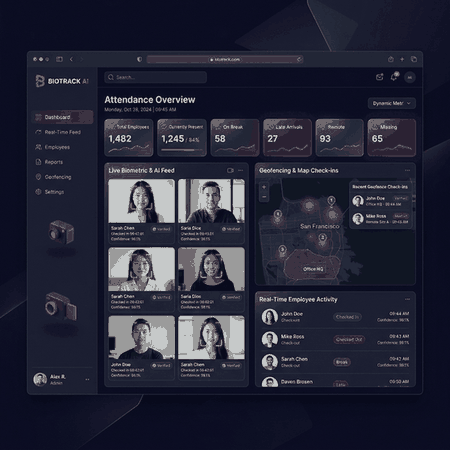
Face recognition attendance is the fastest-growing method in Indian hospitals, BPOs, schools, and IT offices. The employee simply looks at a camera; the device matches the face against the enrolled template and marks the punch in under a second. Contactless capture solves the hygiene and worn-finger problems, enrollment is quick, and throughput at peak hours is excellent—useful when a thousand people walk through two gates in fifteen minutes. Modern devices handle masks, low light, and different angles with configurable tolerance, and they are dramatically harder for an employee to "loan out" than a fingerprint.

The honest caveat around face recognition is privacy and regulatory sensitivity. Biometric data, including facial templates, deserves the same protection as any personal data. Indian firms adopting face attendance should inform employees in writing, store templates securely, and—where possible—process matching on the device rather than uploading facial images to a server. Choose a vendor that treats this as a security design decision, not a legal afterthought.

  Mobile Attendance and GPS Attendance

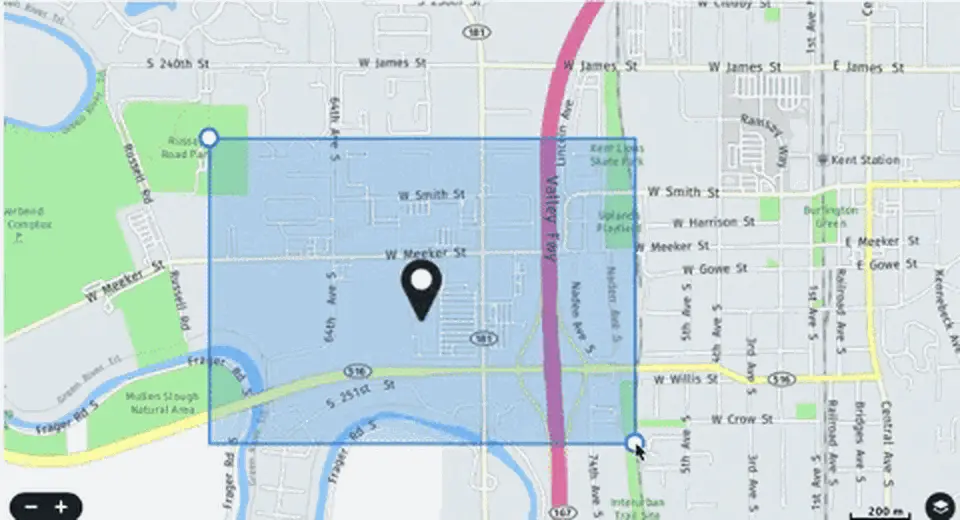
For field engineers, delivery partners, sales executives, installation crews, and construction staff who physically cannot stand in front of a wall-mounted device, mobile attendance is the answer. Employees install a small app (or use a web link), and clock in from their phones with a timestamp. GPS attendance extends this with location verification: the app captures the employee's coordinates, and the system validates the punch against a configured geo-fence or a permitted radius around the job site. A technician standing inside a client's campus can clock in, while the same punch from a house three blocks away is rejected or flagged for review.

Mobile and GPS attendance do not eliminate the need for judgement. Employees may genuinely forget a punch, run out of battery, or work in a location with weak signals. Effective platforms therefore pair mobile capture with photo verification, IP checks, and a transparent "apply for correction" workflow that a supervisor approves. The policy must be equally clear: field staff are tracked at attendance points, not surveilled continuously. Done well, mobile attendance is the tool that finally brings a scattered field force into the same payroll-grade discipline as an office floor.

  QR Code and RFID Cards

QR code attendance and RFID/card-based systems are the quiet workhorses of campuses, security companies, and manufacturing units. An employee scans a laminated QR code at a checkpoint or taps an RFID card on a reader, and the punch registers instantly. These methods are fast, cheap, and as close to foolproof at the device as anything on the market. They excel in throughput-critical environments—schools with thousands of students, events, gates with long queues—and in sectors like healthcare where employees already wear identity tags.

Their weakness is the age-old weakness of any card: it can be shared. A card left in a drawer, a QR code photographed and forwarded, and you are back to proxy punches with a modern smile. When Indian businesses use QR or RFID, the smarter approach is to treat it as a convenience layer in front of the attendance management discipline—optionally combined with a photo capture or a mobile verification for sensitive payroll dependencies—rather than as the sole proof of presence.

  Web Kiosk and ESS Clock-Ins

A web-based clock-in (sometimes styled as a kiosk or an employee self-service page) lets staff punch in from any browser on a computer, tablet, or phone without installing anything. It is ideal for remote knowledge workers, branch staff without a dedicated device, and as a universal fallback when a biometric device or mobile app misbehaves. Because it relies on someone being present at a screen, location verification is usually weak, but combined with IP restrictions for office networks it remains perfectly serviceable for desk and remote roles.

  A Practical Rule of Thumb

Fixed-site workers → biometric fingerprint or face-recognition device. Field and mobile teams → mobile attendance with GPS and photo verification. Campuses and high-throughput gates → QR or RFID cards. Remote desk staff → web kiosk clock-ins. A good attendance management system blends all of them into one payroll-ready record.

Section Two

Setting Your Attendance Policy: Grace, Late Marks, and Overtime

Technology only records punches; it is the attendance policy that decides what those punches mean. Half the disputes in Indian workplaces—"I was only two minutes late," "that half-day is unfair," "my overtime was never paid"—exist because the policy was never written, or never communicated, or expected different things from different teams. An attendance policy is the document that converts a time log into payroll discipline, and it deserves the same care as any contract term.

  The Grace Period

Every office tolerates the odd one or two minutes of lateness—buses, trains, and the ever-present Delhi-Pune-Noida traffic make absolute punctuality unrealistic. The grace period is the small buffer, typically five to fifteen minutes, after the shift's scheduled start during which a punch is still treated as on time. Setting it is a culture decision: a five-minute grace keeps a sales floor honest; a fifteen-minute grace might suit a creative team with flexible hours. The important thing is that the number is explicit, written down, and identical for everyone in the same role. A grace period that is "implied" is the single most common source of late-mark grievances.

  Late Marks and the Slab System

Beyond the grace period, lateness usually triggers a defined scale. A common Indian pattern: lateness up to a fifteen-minute threshold earns a "late mark"; three or four late marks in a month exhaust a tolerance; and repeated lateness without a mark escalates to a warning or a deduction. More serious rules convert arrival after a set number of hours (say, past 11 AM for a 9 AM shift) into a half-day. The point of a slab system is predictability. Employees should be able to calculate the consequence of a bad morning before it happens, so that there is no room to claim surprise later.

  Half-Days, LOP, and Absence

The policy must also say what happens when someone is neither fully present nor wholly absent. A half-day is typically triggered by arriving after a defined cutoff time or leaving before a defined early-exit time. Absence without an approved leave application becomes loss of pay (LOP), or is adjusted against the employee's leave balance if the policy allows. Where an employee attends less than a minimum required portion of the shift, some organisations treat the whole day as absent; others record the present hours. Whatever rule you choose, it must be written, consistent, and ideally visible in the system so the calculation is automatic rather than a monthly guessing game.

  Overtime Calculation the Right Way

Overtime calculation is where attendance tracking software proves its worth. Manual overtime is built on stack of approvals, sticky notes, and "I roughly assume." System-based overtime is built on the difference between the scheduled shift and the actual punch record, cleaned of exceptions. Before configuring any tool, decide the policy rules:

  •   What counts as overtime: time beyond the scheduled shift end, beyond a weekly cap, or only with prior approval.
  •   How minutes round: many systems round to the nearest 15 or 30 minutes to keep arithmetic clean and auditable.
  •   Whether overtime is paid, banked as comp-off, or partly both, and how it interacts with weekly offs and public holidays.
  •   Who authorises it: auto-flagged overtime still needs a manager's approval before it reaches the payroll sheet.

A well-configured system should separate normal hours from overtime hours on a per-day basis, show the exact minutes an employee stayed late, and flag anything that needs human approval. When the policy is clear and the calculation is automatic, overtime stops being an argument and becomes a line item.

Section Three

Shift Scheduling and Rota Management

Once your workforce operates beyond a single 9-to-6 day, attendance management transforms into shift management. Manufacturing units run three shifts; hospitals run morning, evening, and night; retail and hospitality staff work staggered rosters; security and logistics teams cover 24x7. In each case, the attendance system has to know which employee belongs to which shift on which day before it can judge a punch as timely, late, or absent. This is where shift scheduling and rota management become inseparable from attendance itself.

  Designing Shifts That Scheduling Software Understands

The first step is to define every shift with precision: a start time, an end time, a break policy, and a weekly-off pattern. Dismissing "the morning shift" as vague is a mistake a system cannot fix. One 8-AM-to-4-PM shift and another 8-AM-to-4-PM shift with a one-hour unpaid lunch are different shifts, and they calculate differently. When the roster is built, the software compares each punch against the shift the employee was actually assigned to that day. That is the core service of any serious attendance management system with shift scheduling: the machine never mixes up Tuesday's morning shift with Wednesday's late shift.

  Rota Planning for Rotating and Night Shifts

Rotating rosters are the bread and butter of Indian manufacturing and hospitality. A rota cycles employees through shifts (say, week A morning, week B evening, week C night) while ensuring headcount targets are covered daily. Good rota planning balances four pressures: coverage (enough people per shift), fairness (no one is perpetually stuck on night shift), rest (adequate breaks between shifts), and compliance (weekly rest days are preserved). The system should let the supervisor draft cycles once, apply them across teams, publish rosters in advance, and handle mid-cycle swaps when someone exchanges a shift with a colleague.

Night shifts deserve special attention. An employee who clocks in at 10:00 PM and clocks out at 6:00 AM the next morning is straddling two calendar days; the attendance system must assign that entire span to the correct payroll date. Careless systems split the night into two days, corrupting both overtime and leave calculations. Before you buy, ask the vendor how their software handles midnight-crossing shifts and split breaks—this single question separates serious shift management from cosmetic features.

  Shift Swaps, Approvals, and the Human Layer

No roster survives contact with real employees, and shift swaps are a normal part of life. Employees ask to exchange a day, a manager must approve, and the attendance record must reflect the new reality. Tools that handle this well keep a proper audit trail: the original roster, the request, the approval, and the adjustment are all visible months later when payroll or an audit asks. Without that trail, a shift swap silently becomes an unexplained absence in somebody's records. A dependable rota-and-shift system makes the human layer visible and accountable, not mysterious.

  What Good Shift Management Feels Like

The night before, every employee knows today's shift, its start time, and its break plan. At the gate, the device recognises the shift automatically. At month end, overtime is computed against each shift's real boundary, night punches belong to the right date, and the weekly rest pattern is visible at a glance for inspection.

Section Four

Remote and Hybrid Work: Attendance That Respects Distance

Hybrid and remote work has changed the geography of Indian employment. A company may have an office in Gurugram, a developer in Bengaluru, a support team split across tier-2 towns, and consultants who visit client premises daily. The attendance system must handle all of it with one consistent rule-book. The old binary—"you were either at the office or you were absent"—simply does not describe a modern workforce.

  Mobile Attendance as the Remote Standard

For anyone not standing in front of a biometric device, mobile attendance is the natural channel. Employees clock in through the company attendance app, and the punch carries a timestamp, the device identity, and—when enabled—location data. For remote knowledge workers, the honest expectation is closer to "verified presence for the agreed working window" than to minute-level micromanagement. The policy should state plainly which teams punch in daily, which operate on flexible task-based hours, and how a missed punch is corrected without drama.

  GPS Attendance for Field Teams

For field teams, GPS attendance adds the spatial proof that a punch alone cannot offer. The employing business defines permission areas—a client site, a distribution depot, a project location—and the app verifies that a clock-in happened inside that boundary within a permitted radius. The daily rhythm feels light: the technician taps "start work" on arrival at the site and "end work" on departure, and both punches carry location evidence. A supervisor gets a live view of where the field force actually is, which is invaluable for both accountability and dispatch decisions.

The compliance-minded reader will ask about privacy, and rightly so. GPS attendance should be scoped to attendance moments, not continuous surveillance. A defensible policy states what data is collected (punch time and location), for what purpose (time verification), who can see it (managers and HR), and how long it is retained. When employees know the boundary, they accept the tool; when the tool leaks into a 24x7 tracker, they resist it, and rightly.

  Photo Verification and Selfie Punch-In

Photo-on-punch is a small feature with a large effect. When an employee clocks in through mobile attendance, the app can capture a selfie that is attached to the punch record. It guards against the "my phone is being used by someone else" loophole, provides visual evidence for disputes, and costs nothing in hardware. Combined with GPS and a timestamp, photo verification raises the confidence level of remote attendance to something payroll teams can rely on.

  The Remote Compact

The employer gets visibility; the employee gets a clear, predictable clock. No one is tracked beyond the attendance moment, corrections are transparent, and both sides trust the single shared record. That compact is what turns mobile and GPS attendance from a control tool into a collaboration tool.

Section Five

Fraud Prevention: Buddy Punching and Proxy Attendance

Buddy punching—one employee marking attendance for an absent colleague—is older than electricity and more common than most owners admit. In a small team it looks like a harmless favour between friends; in a factory of three hundred it becomes a steady leak, paying wages for hours that were never worked, and quietly destroying the fairness of every other employee who shows up on time. Understanding how different technologies stop proxy attendance is central to choosing a system.

  What Biometrics Truly Solve

Biometric attendance—fingerprint or face—attacks buddy punching at its root because the verifier is the body, not a card. A fingerprint cannot be borrowed the way an ID card can. Face recognition goes further and makes it nearly impossible to fake presence at the device, since a live face is hard to reproduce convincingly. This is the real and uncomplicated benefit of biometrics, and it is the reason so many Indian factories moved to fingerprint machines within months of first experiencing proxy punches.

  When Phones Are the Punch

Mobile attendance opens a new door: if a phone is the punch device, an employee can pass the phone to a colleague. The practical safeguards are layered. Device binding ties the app to a specific phone via SIM and device ID. One-signature login prevents a standing session being "left logged in." A selfie on punch, discussed earlier, introduces a visual check that is hard to fake at scale. GPS confirms the punch happened at the location it claims. And exception reporting—the same employee punching from two phones, or two punches from one device in a minute—lets HR spot patterns rather than chase individuals.

  The Layered Defense Principle

No single control is unbreakable, but layered controls are effectively so. A factory might use a fingerprint device at the gate, supervisor spot-checks on the floor, and an exception report that flags every day on which an employee's first and last punches came from unusual devices or times. A field operation might use GPS plus selfie plus manager approval of absences. Each layer raises the effort required to cheat until it is simply not worth it. The policy should state the consequence of proxy attendance as a disciplinary matter; the system should make the act hard to achieve and easy to detect.

  The Real Win Isn't the Tech

When employees know the system verifies identity, location, and time together, honest attendance becomes the norm instead of the anomaly. The fraud-prevention value of an attendance management system is measured not in the incidents it catches but in the culture it quietly creates.

Section Six

Leave Management Integration and Payroll Integration

Attendance does not exist in a vacuum; it is one half of a pair whose other half is leave. A punch record shows when an employee was present; the leave management system shows why the employee was not present. When the two speak to each other, absence becomes legible: an unpaid absence, a casual leave, a medical leave, a public holiday, or a weekly off all resolve into one clean answer for payroll. When they do not speak, HR spends every month reconciling two lists by hand and apologising for the inevitable mismatches.

  Why Leave Integration Matters

Consider the month of a typical employee: three days of casual leave, one day medical leave, a public holiday, two weekly offs, and twenty working days. Without integration, some clerk must manually cross-check each absence against the leave balance and decide whether a particular absent day is a leave or an LOP. With integration, the attendance system and leave module share one calendar: approved leave automatically covers the absent slot, leave balances deduct on approval, and the only cases that reach a human are genuine exceptions. Leave quotas, earned leaves, carry-forward limits, and EL/second-half rules all apply automatically. The result is a month end in hours, not days.

  How Payroll Integration Completes the Loop

Payroll integration is the finish line of every attendance workflow. When attendance data flows into payroll on the last day of the month, salary components are computed on the actual facts: present days, LOP days for unapproved absences, overtime hours at the agreed rate, leave encashment where applicable, and full-and-final settlements when an employee exits mid-month. The payroll sheet no longer depends on someone typing numbers into a spreadsheet from a printout; it depends on the verified attendance record.

The less visible benefit is auditability. Every rupee paid for a day of work is traceable to a punch, an approved leave, or an authorised absence. When an employee disputes a salary figure, the answer is not an argument; it is a query that shows the exact day, the exact punch, and the exact rule that produced the figure. Statutory computations that depend on attendance—gratuity, bonus eligibility, and other entitlements tied to months worked—also become cleaner when the underlying record is trustworthy.

  The Rule Engine Nobody Sees

The quiet hero of leave and payroll integration is the rule engine: the definitions of half-day thresholds, rounding rules, overtime multipliers, LOP days, and leave expiration that sit between fact and salary. Companies configure these once, test them on a sample month, and then trust them to behave identically forever. This removes both the arithmetic noise and the month-end arguments that flavour so many Indian payroll rooms, and it is why attendance tracking software India increasingly buys is sold—rightly—as attendance-plus-payroll rather than attendance alone.

Section Seven

India Labour Compliance: Working Hours and Overtime Norms

Indian labour law is federal in structure and demanding in practice. The norms that bind an employer—maximum daily and weekly working hours, weekly rest days, overtime compensation, and applicable leave—differ across states and across the Acts that govern a particular establishment. An attendance management system cannot replace legal advice, but it can do something nearly as valuable: it can maintain the working-hour records and overtime evidence that any audit or inspection will ask for.

  Working Hours: The Broad Indian Norms

Across the family of Indian statutes, the familiar legal picture is a maximum working day of nine hours and a maximum working week of forty-eight hours, with a weekly rest day and intervals for rest during the day. Certain Acts prescribe tighter limits for specific classes of employees or specific industries, so "forty-eight hours" is a starting point, not a universal ceiling. The modern labour codes aim to harmonise many of these frameworks, and when the codes' substantive rules are fully in force they continue the same core themes: caps on daily and weekly work, mandatory rest, and premium compensation for any work beyond the fixed limit.

  Overtime Norms at a Glance

The classic Indian overtime norm is compensation at twice the ordinary rate of wages, applicable when a worker works beyond the prescribed daily or weekly limit or on the rest day. Some categories are carved out, some state rules vary, and the exact trigger (daily excess versus weekly excess) depends on the governing statute. What matters for an attendance system is the consequence: the software should be able to compute hours beyond the configured ceiling at the overtime rate, and to do so from punch data rather than from claim. A factory that relies on written overtime claims is a factory exposed; a factory whose overtime calculation flows from verified punches has a record it can defend.

  Records and Inspections

Labour inspectors look for three things in attendance matters: the register of working hours, the record of overtime paid, and the evidence of weekly rest. Paper registers are legitimate but invite transcription errors and correction-feats that undermine their credibility. An attendance management system that stores raw punches, shift assignments, approved exceptions, and computed overtime in a single auditable time series presents a stronger, cleaner picture than any binder of loose sheets. Keeping attendance records in a tamper-evident digital form is one of the cheapest defences an Indian employer can buy.

  An Honest Word on the Codes

The four labour codes—wages, industrial relations, social security, and safety & working conditions—aim to consolidate decades of state and central law. Rules, notifications, and state adoptions continue to evolve. Treat this guide as background, configure your system on your current statutory obligations, and confirm the fine detail with your legal or compliance advisor before finalising overtime and working-hour rules.

Section Eight

Data Security: Protecting Attendance and Biometric Data

Attendance data is personal data. Alongside timestamps and geo-coordinates sits a growing volume of biometric information—fingerprints and facial templates—plus employee identifiers, leave records, and payroll-sensitive numbers. A workforce records system is, in effect, a database of intimate individual information, and Indian employers are increasingly expected to treat it with the seriousness it deserves.

  Treat Biometric Data as the Crown Jewel

A fingerprint, unlike a password, cannot be "changed" when it is compromised. Facial templates carry similar weight. The first security discipline is, therefore, minimisation: collect what the attendance process needs and nothing more. Many modern biometric devices enrol a mathematical template rather than a photograph, and match against that template locally on the device, pushing only a "matched" event and a timestamp to the server. This design—template rather than image, device-side matching rather than server-side storage of raw scans—sharply narrows the attack surface and should be a standard question in any vendor evaluation.

  Access, Encryption, and Role Control

A record is only as secure as the people who can open it. Attendance systems should route data over encrypted transport, store sensitive fields encrypted at rest, and expose information through role-based access: a supervisor sees his team only, the HR administrator sees policy and exceptions, and payroll sees computed output rather than raw sensor data. Login controls—two-factor authentication for administration accounts, device binding for field apps—prevent the single biggest practical breach, which is a borrowed credential from an unlocked desk.

  Retention, Deletion, and Ownership

Data should have a life cycle. Attendance and leave records deserve retention aligned with statutory record-keeping requirements and audit expectations; biometric templates need not outlive the employment relationship. When a worker leaves, the enrolment should be purged or archived per policy, and the exiting employee should know it was done. Where the data is hosted—your own server versus a cloud provider in India or abroad—has data-sovereignty implications your compliance advisor can weigh. Choose hosting you can live with, because ownership of this data is a long-running obligation, not a one-time choice.

  The Checklist That Matters

Template-based, not image-based, biometric storage • encrypted transport and at-rest storage • role-based access • strong admin authentication • defined retention with exit-time deletion • transparent communication to employees about what is collected and why. Cover these bases and data security becomes a strength to name in client agreements and vendor audits, not a worry at 2 AM.

Section Nine

Implementation and Adoption: From Purchase to Daily Habit

The most capable attendance management system in the world is worthless if it lives in a cupboard. Implementation is not a purchase event; it is a change-management project that touches devices, policies, habits, and even fears. Nearly every abandoned attendance implementation we have seen failed not on technology but on adoption: unclear roles, untrained supervisors, a grievance nobody answered, or a rollout that expected a 300-worker factory to digest a new routine overnight.

  Roll Out in Phases, Not in a Single Storm

The sanest pattern for a mid-size Indian company is phased rollout. Begin with one site, one department, or one shift as a pilot. Enrol faces or fingerprints slowly over a week, use the parallel period to compare the new system's output against the old records, and resolve policy questions—grace, late marks, overtime authorisation—while the stakes are still small. A pilot builds the confidence and the reference scripts that make the full rollout boring, and boring is what you want in production.

  Training Beyond the Admin Demo

Training must reach three audiences separately: the HR and payroll users who need the rule engine and reporting; supervisors who must approve exceptions and answer employee questions; and employees themselves, who need to know how to punch, how to correct a missed punch, and where to see their own attendance. The most overlooked audience is the supervisor, because every frontline question—"the machine didn't take my print," "I forgot to punch at break"—lands on that desk first. Give supervisors a two-page cheat sheet and a named human to call.

  Communication and the First Month's Grievances

Before go-live, publish a short, plain-language notice: what will change, how employees verify their own record, how to request a correction, and the consequence of proxy punches. Expect a spike of correction requests in the first month as people adjust—this is normal and healthy, not system failure. A transparent correction process, honestly applied during the transition, does more for adoption than a month of motivational posters. After sixty days, the system should be largely invisible: punches happen, exceptions resolve, payroll flows, and nobody thinks about it until the monthly report lands.

Section Ten

The ROI and Cost Picture: What It Really Costs

Every owner asks the same question before buying an attendance management system: what does it cost, and will it pay for itself? The honest answer is that the right system pays for itself quickly, but the arithmetic depends on how you measure the return. Rather than quote rupee figures—which change with device models, user counts, and deployment choice—it is more useful to think about the value streams, and let your own numbers fill them in.

  Where the Savings Come From

The first saving is the payroll leakage from proxy punches and sloppy logs—the hours paid but never worked. Even a couple of employees abusing a manual or card system can fund a good part of the technology in the first year. The second saving is administrative: the hours your staff spend transcribing, reconciling, and arguing over attendance disappear into an automatic pipeline. The third is accuracy: overtime paid on verified minutes, not inflated claims; LOP applied consistently; and leave balances that never silently drift. The fourth, quieter saving is compliance protection—the cost of a mismanaged overtime or records dispute is measured in risk and disruption, not just fines.

  What Drives the Price of Upfront Spend

Cost drivers are predictable: the number of employees and devices, the mix of capture methods (biometric hardware versus mobile-only), cloud-versus-on-premise hosting, the depth of payroll integration, and the level of support and installation your sites need. A mobile-only deployment for a field force can start lean; a factory with several gates, night shifts, and statutory reconciliation will invest more because it receives more. The most honest conversation you can have with a vendor is one that starts from your headcount and site map, not from a list of features. Ask the vendor for their best value package for your exact profile, and remember the minimum price question: what is the minimum viable configuration that would genuinely serve this team?

  Ongoing Costs Beyond the Invoice

Subscription or licence fees are only part of the story. Ongoing costs include device maintenance and consumables, support plans, employee-time costs during rollout and training, and any cost of keeping payroll rules current as statutory frameworks change. These are small per head, but they are real, and a transparent vendor will show them to you before you sign. When you compare quotes, compare the lifetime picture—not the first-year discount.

  The Bottom Line

Most Indian organisations find the investment recovers comfortably within the first year through leak plugging alone, then keeps producing time savings and accuracy gains every month after. The right benchmark is not the invoice; it is whether the system runs payroll without drama and survives an audit without flinching. For the minimum price and best value quote specific to your setup, contact our team directly—we will price to your reality, not a brochure.

Section Eleven

Frequently Asked Questions

Q. What is an attendance management system?

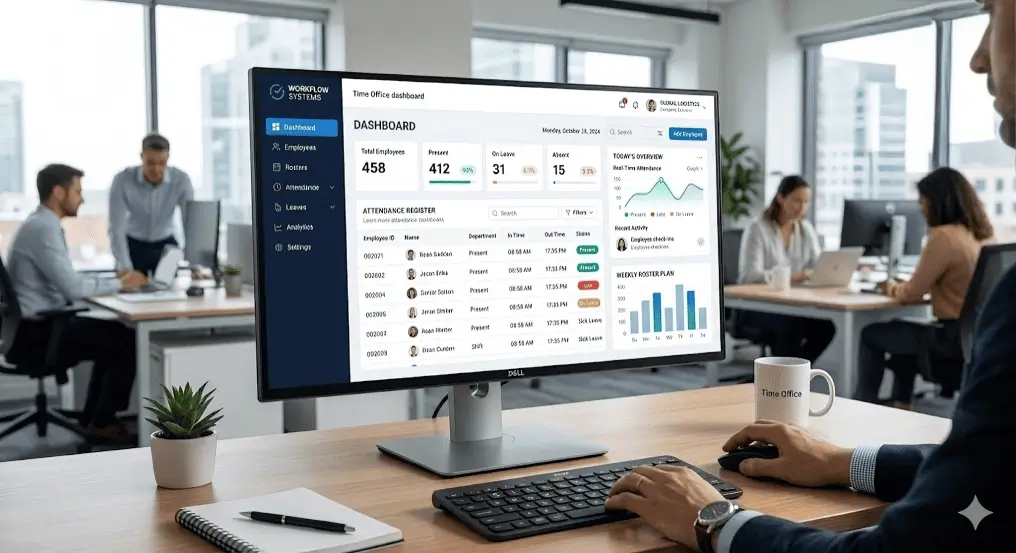
An attendance management system is software that records employee presence using devices or apps—biometric fingerprint, face recognition, mobile GPS, QR, RFID, or web—and then applies workplace rules to convert those punches into working hours, overtime, late marks, and absence. Its real output is a clean, payroll-ready and audit-ready record, which is why it is so often paired with leave management and payroll systems.

Q. Which attendance method is best for a small business in India?

For a small fixed team, a fingerprint attendance device is the proven, low-friction answer—it blocks buddy punching and needs no employee training beyond a finger. If the team is partly on the road, add mobile attendance with GPS. For a very lean budget, mobile-only attendance can start without hardware and be extended to a device later; discuss the best value option for your headcount with the vendor.

Q. How does GPS attendance prevent fake punches?

GPS attendance validates that the punch happened within a permitted area and radius, so a punch claimed from a job site must actually originate there. When combined with device binding, a selfie on punch, and a timestamp, GPS makes it very hard to record attendance for a location the employee was never at.

Q. What is buddy punching and how do I stop it?

Buddy punching is one employee marking attendance on behalf of an absent colleague. It is stopped by biometric identity—fingerprint or face—at fixed devices, and by device binding plus photo verification on mobile. An exception report that surfaces unusual punch patterns turns occasional cheating into a detectable anomaly rather than an invisible leak.

Q. How is overtime calculated in these systems?

The system compares actual punches against the configured shift start and end, splits normal hours from hours beyond the limit, applies your rounding rule (commonly 15 or 30 minutes), and multiplies the excess by the agreed overtime rate. Overtime that requires approval is held in a queue until a manager signs it off, so only validated hours reach payroll.

Q. Can attendance software handle night shifts?

Yes, when implemented properly. The critical detail is that punches crossing midnight must be assigned to the correct payroll date and shift. Ask the vendor to demonstrate a night-shift scenario before you buy; a system that splits a night into two days will corrupt overtime and leave records month after month.

Q. Is biometric attendance data safe?

It is safe when the system stores encrypted templates rather than raw scans, matches on the device where possible, limits who can access records, and deletes enrolments when an employee leaves. Ask your vendor and your compliance advisor these questions before hardware is installed—data security is a design decision, not an add-on.

Q. Does an attendance system integrate with payroll software?

Most modern platforms do, and this integration is precisely what makes attendance useful. Attendance feeds present days, LOP, and overtime into the payroll calculation, while the leave module covers approved absences. When the two share a rule engine, the month-end payroll runs on facts instead of transcription.

Q. What is the minimum attendance system I can start with?

The minimum viable configuration depends on your team: a single biometric device for a fixed small team, or a mobile-only app for a dispersed one. Start there, run a month in parallel with your old records, and expand capture methods or devices once the data quality proves itself. The minimum price for such a starter setup is something your vendor can quote precisely for your headcount—the first conversation should be about scale, not features.

Section Twelve

Attendance Management Metrics Every HR Team Should Watch

Once your attendance data is clean, automatic, and trusted, it becomes something most companies never expect: a management instrument. Every punch is a data point, and every month produces a time series that tells you where discipline is fraying, where overtime is quietly climbing, and which teams are finding attendance hardest. The trick is to read attendance through metrics rather than through gossip—and to design the dashboard before you need it, not on the day a crisis arrives.

  The Five Metrics That Deserve a Permanent Slot

A good attendance management system will compute most of these for you. What matters is that HR decides, in advance, which numbers drive decisions and how each number is defined, so that a figure means the same thing to every department:

  •   Absenteeism rate—working days lost to absence as a percentage of scheduled working days. Track it overall and per department; a single team running consistently above the company average is a problem to investigate, not a coincidence.
  •   Late-arrival rate and average minutes late—the share of first punches landing after the grace period, and how far past it they land. A rising average-minutes-late figure often predicts an attendance problem before the late-mark count does.
  •   Overtime hours as a share of total hours worked—a percentage that exposes shifts or teams where the roster is chronically understaffed. When overtime crosses a threshold your leadership sets, the fix is usually staffing, not discipline.
  •   Exception and correction-request rate—counted against total punches. A steady stream of missed-punch and proxy-flag corrections is a red flag for training, device placement, or genuine policy friction.
  •   Punctual-arrival and early-departure counts—the positive mirror of lateness. Tracking the share of employees who arrive on time rewards good behaviour and keeps the report from becoming a purely punitive scoreboard.

  Reading the Numbers Without Micromanaging

The discipline that makes metrics useful is a monthly rhythm. Leadership reviews the aggregated figures—overall absenteeism, overtime share, late-arrival trend—while supervisors see the detail for their own teams only. A single bad week means very little; what matters is the three-month trend. When a metric drifts consistently, it should trigger a conversation about rostering, workload, or training, not a memo full of names. Employees accept attendance data far more readily when they can see their own record is the same number management reads, and when the system treats a trend as a signal to investigate rather than as evidence of character. Teams that are consulted, whose corrections are heard, and whose opinion of the day remains their own, use the record as a mirror instead of a weapon.

  Watch the Trend, Not the Incident

A metric earns its place only if someone acts on it monthly. Choose two or three leading numbers, review them on the same day every month, and connect each one to a named decision—otherwise the dashboard becomes decoration and the early warning is lost.

Section Thirteen

Mistakes to Avoid When Automating Attendance

Automation rarely fails because the hardware breaks; it fails because of decisions made before the first punch. Companies buy impressive devices, relax for a month, and then discover that the promise of accuracy has dissolved into a new set of arguments. The good news is that nearly every failure follows a pattern, and every pattern is avoidable. These are the mistakes we see most often in Indian workplaces, and the habit that avoids each one.

  Mistake One: Buying Hardware Before Writing the Policy

The most expensive imaging, the most accurate fingerprint sensor, and the smoothest mobile app are all worthless without the ground rules that give a punch meaning. Teams that install first and document later discover that grace periods, late-mark slabs, and overtime rules get invented one grievance at a time—by the loudest voice or the most lenient supervisor. Write the policy first, in prose a new joiner can read in one sitting, and configure the system to match it. The technology then does not invent rules; it enforces rules you chose deliberately.

  Mistake Two: Forcing One Capture Method on Every Team

A single fingerprint device will frustrate a field team that is never near the gate, and a mobile-only policy will quietly annoy desk staff who stand next to a biometric machine. The practical rule is to free each team to use the method that matches its reality—biometrics at fixed sites, mobile with GPS for field staff, web clock-ins for remote desk roles—and let one unified record bring them together. Honest attendance cultures are built from fit, not from uniformity.

  Mistake Three: Making Corrections a Punishment

Employees will miss punches—a dead phone battery, a biometric sensor that reads poorly, an emergency that pulls someone away at 9:02. If correcting that punch requires a disciplinary gauntlet, teams will simply let errors stand and resent the system. Build a transparent correction workflow: a short self-service request, a supervisor approval, a visible audit trail, and a monthly reconciliation of anomalies. When corrections are easy and honest, the data stays clean; when they are impossible, the data slowly rots and the arguments return.

  Mistake Four: Automating Attendance in Isolation

An attendance system that does not talk to leave and payroll creates two truths about the same month—and HR inherits the job of reconciling them by hand, which is exactly the manual work automation was meant to kill. Integrate on day one, or at minimum plan the integration before rollout. The attendance record should feed the payroll sheet, and approved leave should cover absent slots automatically. Systems that act alone merely move the transcription error to a new screen.

  The Automation Golden Rule

Automate the boring arithmetic—the counting, the overtime multiplication, the reconciliation—and keep the human judgement on the rare exceptions. A system that does both earns trust; a system that tries to replace human judgement entirely earns resistance.

Final Thoughts

Final Thoughts: Build Attendance That Works for Everyone

We began this guide by saying attendance is the junction of discipline, payroll, and trust. Everything we have covered since—the devices, the policies, the shifts, the integrations, the compliance rules, the security choices—is only a method for keeping that junction clean. The businesses that manage attendance well do not do so through severity; they do so through clarity. The rules are written. The punches are verified. The exceptions are transparent. The record is shared. And because everyone can see the same truth, people stop fighting about the truth and get back to work.

If you leave with one message, let it be this: buy the system for its rule engine and its integrations, not for the glossy size of its hardware. A fingerprint reader or a mobile app is just the door; the value lives in what the software does behind it—shift-aware punch logic, an attendance policy applied without favour, overtime computed from evidence, leave and payroll linked end to end, and records an inspector can trust. Those are the qualities that keep a 300-person factory running on schedule and a 30-person field team honest, and they are the qualities to test in any demo before you commit.

The good news for Indian businesses is that the market has matured. You no longer have to choose between an imported hardware box and fragile homemade spreadsheets; serious attendance tracking software India offers is designed for exactly this country's mix of factory, field, office, and remote work. You can start small, prove the data, and grow with confidence. When you are ready to move from planning to a rollout, sit down with a vendor who asks about your headcount and your shifts first—and build your attendance management system around the way your people actually work, not around a shelf of equipment.

  The Only Three Steps That Matter

Write the policy first. Choose the capture method that fits each team. Integrate attendance with leave and payroll before month end. Everything else is detail—and the right attendance management system should make that detail disappear from your daily life.

Frequently Asked Questions

Which is better: biometric machine or mobile attendance?

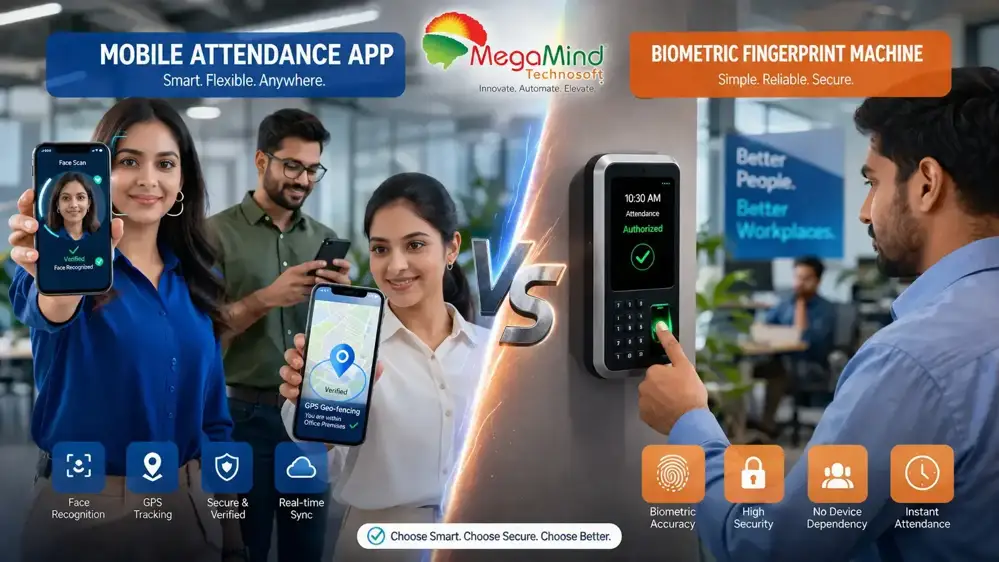
It depends on your workforce. Machines suit fixed sites and shift floors, while mobile attendance with geo-fencing suits field and hybrid staff. Our machine-vs-mobile comparison covers the trade-offs.

Can attendance data go directly to payroll?

Yes. When attendance, leave and payroll sit in one system, approved attendance feeds salary calculation automatically, which removes month-end reconciliation.

Is face recognition attendance accurate and safe to use?

Modern systems use liveness checks to reduce photo or video spoofing. Our face recognition guides explain how it works and what to check before buying.

See MegaMind HRMS in Action

Join 500+ Indian businesses automating HR, attendance, and payroll with MegaMind Technosoft.

Built by Megamind Technosoft

MindWave HRMS, Built by Megamind Technosoft

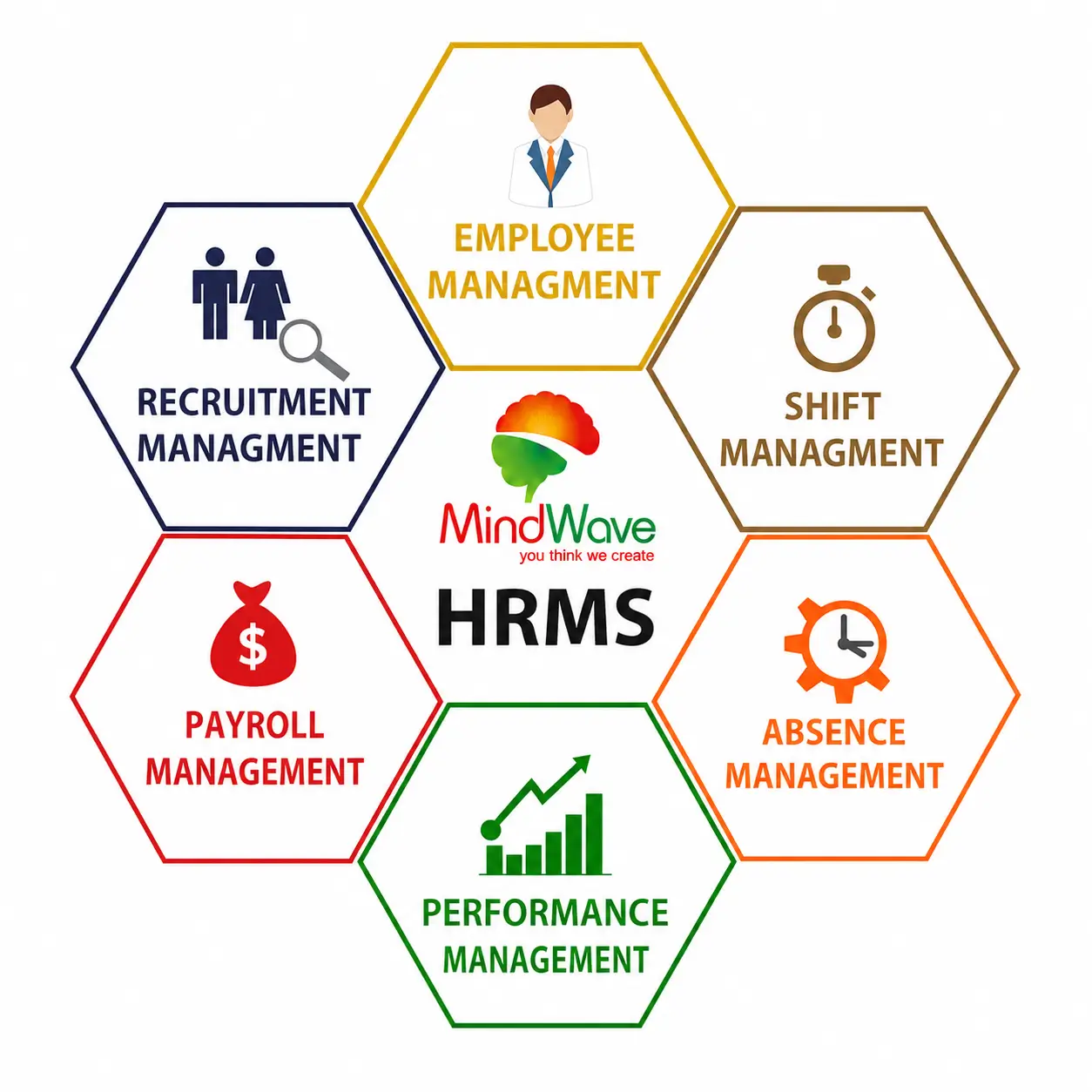
When you are ready to choose, start with the vendor who built the software behind this guide. Whether you use biometric machines or a mobile app, attendance records flow into one accurate ledger that feeds payroll directly. Megamind Technosoft is an ISO 27001-certified HRMS and attendance software company in New Delhi, and its flagship product - MindWave HRMS - unites biometric and face attendance machines, mobile GPS attendance, leave, employee self-service (ESS) and payroll into one accurate, payroll-ready record built for Indian businesses, schools, hospitals and factories.

Why teams trust us

From a Delhi NCR office to pan-India rollout, our team handles biometric installation, face and fingerprint devices, mobile GPS apps and payroll statutory rules in one contract. You get a local partner who installs on-site in Delhi, Noida and NCR, plus India-time phone and WhatsApp support - not just a toll-free number.

Contact Megamind Technosoft
  • Company: Megamind Technosoft Solutions Pvt. Ltd.
  • Product: MindWave HRMS - Attendance, Leave & Payroll
  • Address: 3rd Floor, C-41, Pandav Nagar Complex, New Delhi - 110092, India
  • Phone: +91-7982869398 | +91-9818442254
  • Email: sales@megamindindia.in
  • Website: www.megamindindia.in
  • Timings: Mon - Sat, 9:30 AM - 6:30 PM IST
 Book a Free Demo  Call Us Now  Visit Website